

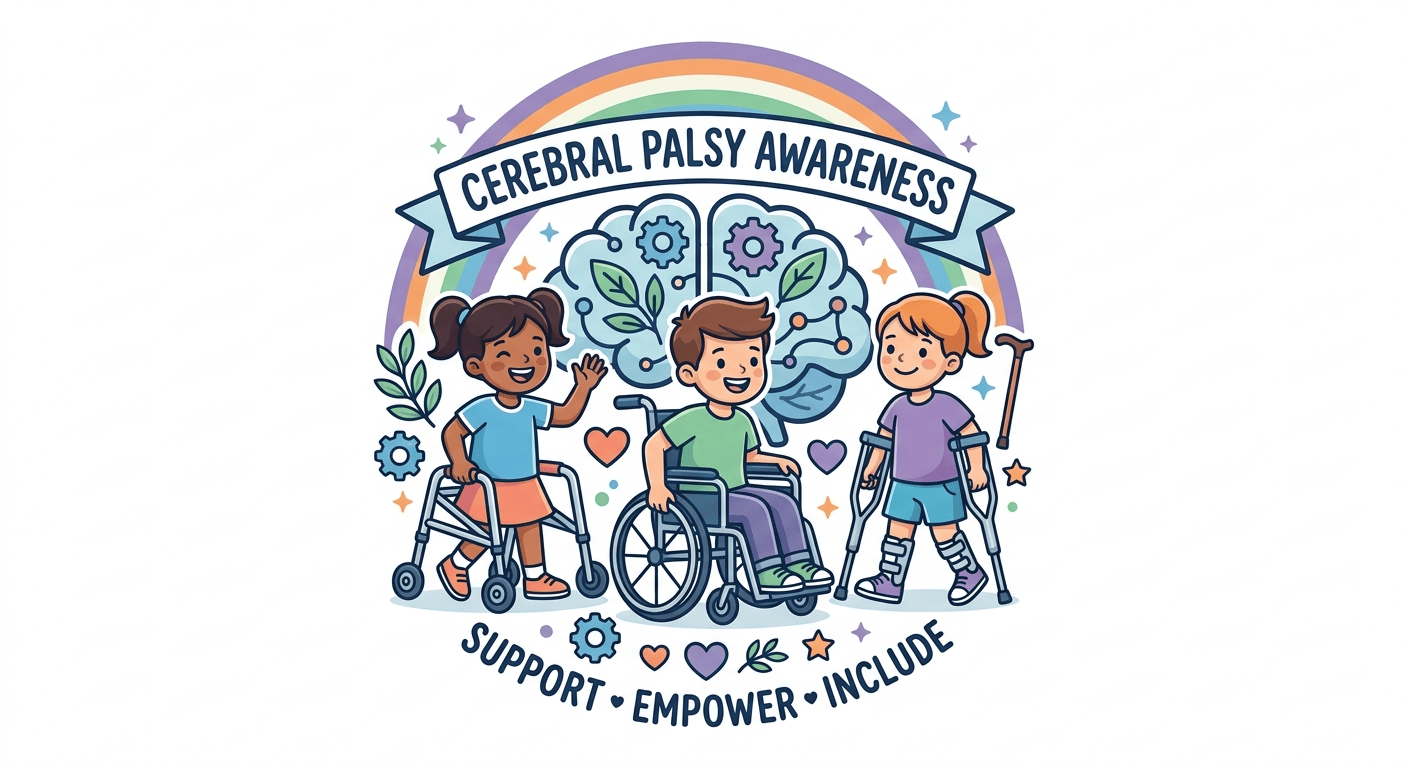
Early Intervention Matters: Early therapeutic intervention in children with cerebral palsy takes advantage of the brain's neuroplasticity during the first few years of life. Starting therapy as early as possible — even in infancy — produces significantly better long-term functional outcomes.
Signs & Symptoms of
Cerebral Palsy
Recognising these signs early can make a significant difference. If your child shows several of these, seek a professional evaluation promptly.
Delayed motor milestones
Not rolling by 6 months, not sitting independently by 9 months, or not walking by 18 months.
Abnormal muscle tone
Muscles may be too stiff (spasticity), too floppy (hypotonia), or fluctuating — affecting posture and movement.
Asymmetric movement
Favouring one hand or side of the body significantly, reaching with only one arm, or walking with an asymmetric gait.
Feeding difficulties
Poor sucking, swallowing, or chewing in infancy; gagging or coughing during feeds; drooling.
Speech and communication difficulties
Dysarthria (unclear speech due to motor difficulties), limited verbal expression, or entirely non-verbal communication.
Seizures
Epilepsy occurs in approximately 25–35% of individuals with cerebral palsy and requires medical management.
Our Approach to
Cerebral Palsy
A structured, compassionate process from first assessment to lasting outcomes — personalised to every child.
Multidisciplinary Assessment
A comprehensive evaluation of motor function, communication, feeding, sensory processing, and daily living skills.
Speech & Communication Therapy
Improving speech clarity (dysarthria), supporting AAC devices for non-verbal children, and addressing feeding and swallowing.
Occupational Therapy
Developing fine motor skills, hand function, self-care independence, and adaptive equipment prescription.
Physiotherapy
Improving muscle strength, range of motion, posture, balance, and gross motor function.
Neurodevelopmental Techniques
Evidence-based NDT approaches to facilitate more normal movement patterns and reduce the impact of abnormal tone.
Family Training & Home Programme
Teaching caregivers handling, positioning, and daily activity strategies to reinforce therapy goals at home.
What Families See
After Treatment
With consistent therapy and family involvement, children with Cerebral Palsy make meaningful, measurable progress at Growing Stars.
Available at
Both Locations
IIM Road Center
Common Questions
About Cerebral Palsy
Still have questions? We're here to help. Reach out to our Lucknow team directly.
Contact UsRelated Conditions
These conditions often co-occur or share similar characteristics with Cerebral Palsy.
Recommended Therapies
Our evidence-based services that directly address Cerebral Palsy.