
Logo Light
Logo Light
Contact Us
hello@growingstar.in
+91-6307034344
Mon - Sat (9AM - 7PM)

Follow Us

Neurological
Ages: 2+ years

Sensory Processing Disorder
Treatment in Lucknow

Helping the world feel manageable

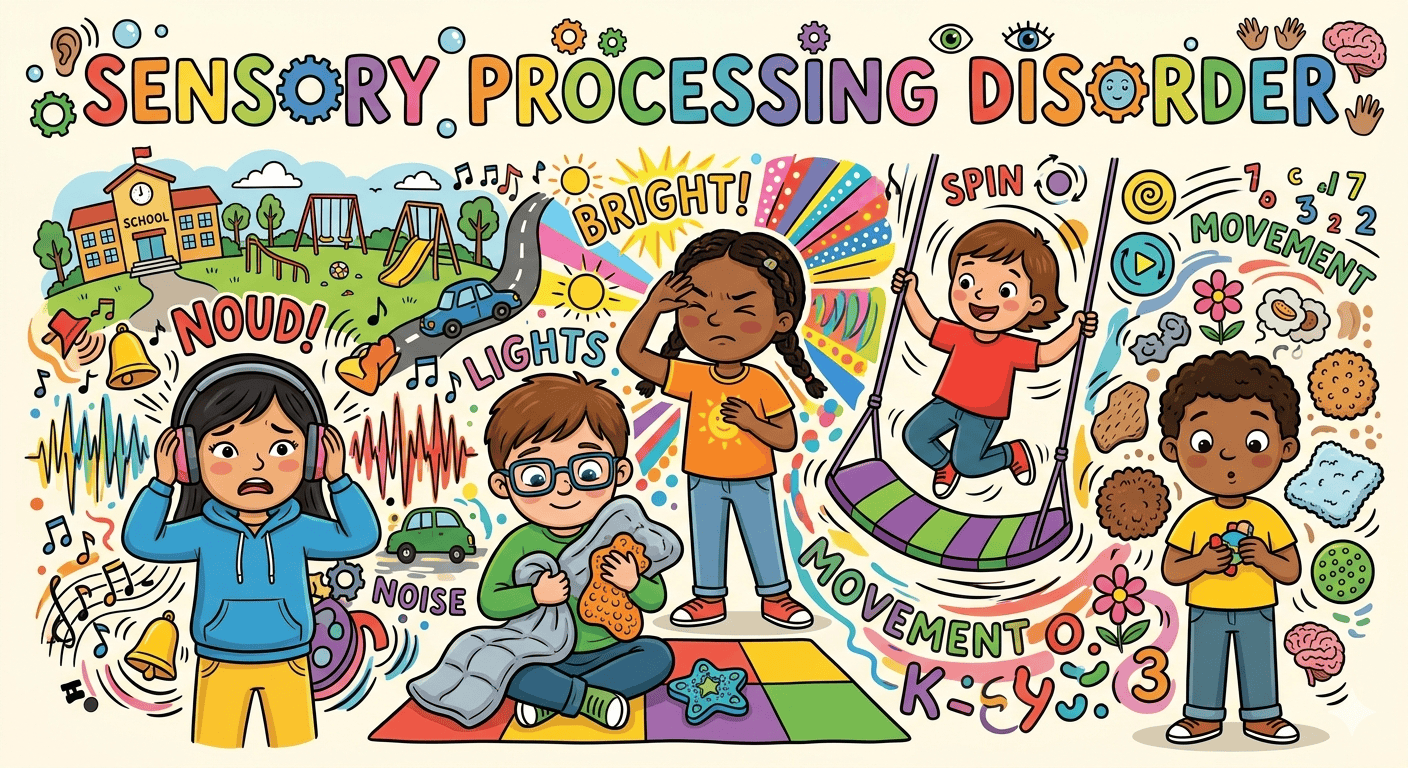
Sensory Processing Disorder (SPD) occurs when the brain has difficulty receiving, interpreting, and responding to sensory information from the body and environment. Children with SPD may be over-responsive (hypersensitive), under-responsive (hyposensitive), or crave sensory input — all of which can profoundly affect behaviour, learning, and daily life.

Sensory integration therapy (Ayres approach)
Sensory diet planning for home and school
Specialist sensory gym equipment
School environment consultation
Parent coaching for sensory strategies
Sensory processing therapy at Growing Stars Lucknow
4.9 · 200+ Google Reviews
Recognise the Signs

Signs & Symptoms of
Sensory Processing Disorder

Recognising these signs early can make a significant difference. If your child shows several of these, seek a professional evaluation promptly.

Extreme sensitivity to textures or clothing

Distress over seams in socks, tags in shirts, or specific food textures — not "fussiness" but genuine sensory discomfort.

Overreaction to sounds or lights

Covering ears at ordinary noise levels, distress in busy environments, or avoiding bright light.

Sensory seeking behaviour

Constantly moving, crashing, jumping, spinning, or seeking deep pressure — the child who never stops.

Poor body awareness

Bumping into things, misjudging space, difficulty with balance, or not knowing how hard they are touching.

Emotional meltdowns in sensory environments

Disproportionate emotional reactions in crowded, noisy, or unfamiliar sensory environments.

Feeding difficulties due to sensory aversion

Extreme food selectivity based on texture, smell, or appearance rather than taste.

Understanding the Condition

Causes & Contributing Factors

Understanding why Sensory Processing Disorder occurs helps families navigate the journey with clarity and confidence.

Neurological Differences

SPD involves differences in how the brain integrates sensory signals from the body and environment — a neural wiring difference, not a behavioural choice.

Prematurity

Premature babies miss weeks or months of sensory development in the womb, placing them at higher risk of sensory processing difficulties.

Co-occurring Conditions

SPD very commonly co-occurs with autism, ADHD, developmental coordination disorder, and anxiety.

Genetic Factors

Research suggests a familial component to sensory processing differences, with higher rates in families of children with autism and ADHD.

How We Help

Our Approach to
Sensory Processing Disorder

A structured, compassionate process from first assessment to lasting outcomes — personalised to every child.

Step 01

Sensory Profile Assessment

Evaluation of sensory responsiveness across all sensory systems — tactile, vestibular, proprioceptive, auditory, visual, olfactory.

Step 02

Sensory Integration Therapy

Structured, play-based activities in our sensory gym using the Ayres Sensory Integration approach to help the brain process sensory input more effectively.

Step 03

Sensory Diet Design

A personalised schedule of sensory activities throughout the day to keep the child in an optimal state for learning and participation.

Step 04

Environmental Modifications

Advice on modifying home and school environments to reduce sensory overwhelm.

Step 05

School Consultation

Working with teachers to implement sensory breaks, seating modifications, and environmental adjustments in the classroom.

Step 06

Parent Coaching

Teaching families to understand their child's sensory profile and implement sensory strategies in daily routines.

Expected Outcomes

What Families See
After Treatment

With consistent therapy and family involvement, children with Sensory Processing Disorder make meaningful, measurable progress at Growing Stars.

Improved ability to tolerate sensory input
Better self-regulation and emotional control
Reduced meltdowns in sensory environments
Improved participation in daily routines
Better school focus and participation
Broader food acceptance and feeding tolerance
Where to Find Us

Available at
Both Locations

Main Center

Aliganj Center

MM-271, Sector D, Aliganj, Lucknow
Mon–Sat: 9 AM – 7 PM

IIM Road Center

IIM Road, Near Rajhansh Public School, Lucknow
Mon–Sat: 10 AM – 6 PM
FAQ

Common Questions
About Sensory Processing Disorder

Still have questions? We're here to help. Reach out to our Lucknow team directly.

Contact Us

SPD as a standalone diagnosis is not currently in the DSM-5 or ICD-11, though sensory processing difficulties are well-recognised clinically and described in both. Sensory differences are included as a criterion in autism diagnosis. Many children with significant sensory difficulties benefit from occupational therapy regardless of a formal label.

No. Children with SPD are not being naughty or manipulative. Their nervous system genuinely experiences sensory input differently. What feels ordinary to most people can be physically overwhelming or understimulating for a child with SPD. Understanding this changes the parenting and teaching approach entirely.

A sensory diet is not about food — it's a personalised schedule of sensory activities throughout the day designed to keep a child's nervous system in a calm, alert, and ready-to-learn state. Examples include heavy work activities before school, movement breaks, and deep pressure strategies. Our occupational therapists design these collaboratively with families.

Ready to Help Your Child
Overcome Sensory Processing Disorder?

Book a free 30-minute assessment at our Aliganj or IIM Road center. Our specialists will evaluate your child and design a personalised therapy plan.

Free assessment · No waiting list · Aliganj & IIM Road Centers

Related Conditions

These conditions often co-occur or share similar characteristics with Sensory Processing Disorder.

Recommended Therapies

Our evidence-based services that directly address Sensory Processing Disorder.