
Logo Light
Logo Light
Contact Us
hello@growingstar.in
+91-6307034344
Mon - Sat (9AM - 7PM)

Follow Us

🎀 Speech & Language
Ages: All ages

Voice Disorders
Treatment in Lucknow

Restoring the voice that tells your story

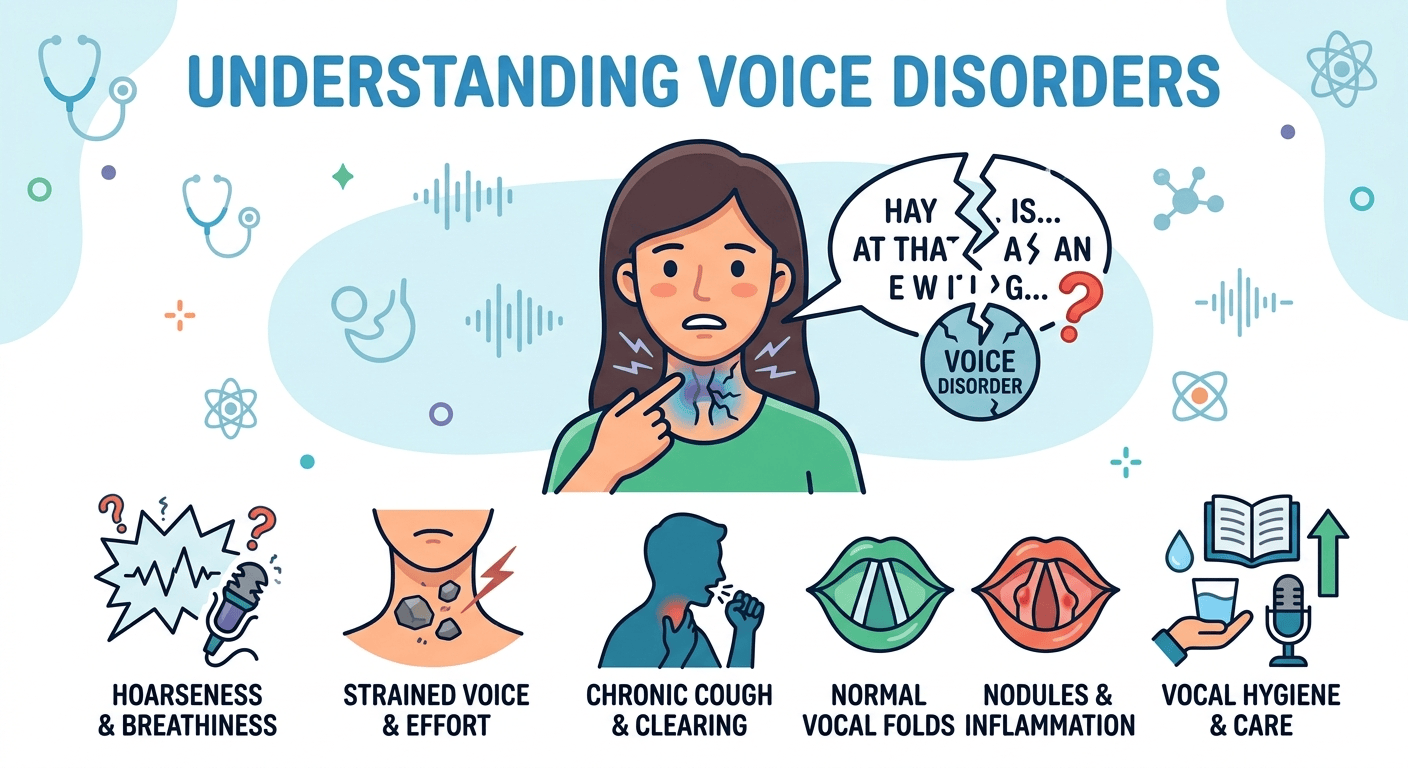
Voice disorders involve problems with the quality, pitch, loudness, or endurance of the voice that are abnormal for a person's age, sex, or cultural background. Whether caused by vocal strain, structural changes, or neurological factors, voice disorders are highly treatable with the right therapeutic approach.

Comprehensive voice quality assessment
Evidence-based voice therapy programmes
Vocal hygiene and care education
Resonance and pitch therapy
Collaboration with ENT specialists
Voice disorder therapy at Growing Stars Lucknow
4.9 Β· 200+ Google Reviews
Recognise the Signs

Signs & Symptoms of
Voice Disorders

Recognising these signs early can make a significant difference. If your child shows several of these, seek a professional evaluation promptly.

Persistent hoarseness

A rough, raspy, or strained voice quality lasting more than two to three weeks that is not explained by a cold or temporary illness.

Vocal fatigue

The voice tires quickly with use, becomes weaker toward the end of the day, or requires significant effort to sustain normal conversation.

Pitch abnormalities

A voice that is consistently too high, too low, or breaks and cracks unpredictably outside of expected developmental changes.

Reduced loudness

Difficulty projecting the voice adequately in conversation or public settings, or a voice that is consistently too quiet.

Breathiness or strain

A breathy quality indicating incomplete vocal fold closure, or a strained, effortful quality suggesting hyperfunction.

Voice loss

Episodes of complete voice loss (aphonia) or severe reduction in voice availability, especially under communicative demand.

Understanding the Condition

Causes & Contributing Factors

Understanding why Voice Disorders occurs helps families navigate the journey with clarity and confidence.

Vocal Misuse & Overuse

Excessive shouting, screaming, prolonged talking, or habitual hard glottal attacks can lead to vocal nodules, polyps, or chronic inflammation of the vocal folds.

Structural Changes

Benign lesions such as nodules, polyps, cysts, or granulomas alter vocal fold vibration and produce characteristic changes in voice quality.

Neurological Causes

Conditions affecting nerve supply to the larynx β€” including vocal fold paralysis β€” can cause significant voice changes requiring specialist intervention.

Reflux & Medical Factors

Laryngopharyngeal reflux, allergies, chronic dehydration, and certain medications can irritate the larynx and contribute to ongoing voice problems.

How We Help

Our Approach to
Voice Disorders

A structured, compassionate process from first assessment to lasting outcomes β€” personalised to every child.

Step 01

Comprehensive Voice Assessment

Perceptual evaluation of voice quality, case history, vocal use pattern analysis, and collaboration with ENT for laryngoscopic examination when indicated.

Step 02

Vocal Hygiene Programme

Education on hydration, voice rest, reducing vocal misuse, managing reflux, and environmental factors that affect laryngeal health.

Step 03

Voice Therapy

Evidence-based techniques including resonant voice therapy, vocal function exercises, flow phonation, and semi-occluded vocal tract exercises.

Step 04

Pitch & Resonance Training

Targeted exercises to optimise habitual pitch, improve resonance placement, and establish efficient voicing patterns.

Step 05

Functional Communication Training

Applying improved voice technique to real-world speaking demands β€” conversation, phone use, classroom or workplace communication.

Step 06

Maintenance & Prevention

Long-term vocal care strategies and monitoring to prevent recurrence, particularly for high vocal demand users such as teachers and performers.

Expected Outcomes

What Families See
After Treatment

With consistent therapy and family involvement, children with Voice Disorders make meaningful, measurable progress at Growing Stars.

Improved voice quality, clarity, and consistency
Reduced vocal fatigue and effortful phonation
Resolution or reduction of vocal fold lesions (where applicable)
Better pitch control and vocal range
Increased communicative confidence
Long-term vocal health through sustainable habits
Where to Find Us

Available at
Both Locations

Main Center

Aliganj Center

MM-271, Sector D, Aliganj, Lucknow
Mon–Sat: 9 AM – 7 PM

IIM Road Center

IIM Road, Near Rajhansh Public School, Lucknow
Mon–Sat: 10 AM – 6 PM
FAQ

Common Questions
About Voice Disorders

Still have questions? We're here to help. Reach out to our Lucknow team directly.

Contact Us

Hoarseness lasting more than two to three weeks without an obvious cause (such as a cold) should always be evaluated by a medical professional, ideally including an ENT specialist and a speech-language pathologist. Persistent unexplained voice changes warrant investigation.

Yes. Vocal nodules are actually one of the most common causes of persistent hoarseness in school-age children, particularly boys. They are almost always caused by vocal overuse and misuse, and respond very well to voice therapy and vocal hygiene intervention.

Most vocal nodules in children resolve completely with voice therapy and vocal hygiene without any surgical intervention. Surgery is rarely required and is generally only considered after a thorough trial of conservative management.

Yes. Voice therapy is an important component of management for vocal fold paralysis, helping to maximise compensation, improve glottal closure, and optimise voice quality. It is used alongside or instead of surgical intervention depending on the clinical picture.

Ready to Help Your Child
Overcome Voice Disorders?

Book a free 30-minute assessment at our Aliganj or IIM Road center. Our specialists will evaluate your child and design a personalised therapy plan.

Free assessment Β· No waiting list Β· Aliganj & IIM Road Centers

Related Conditions

These conditions often co-occur or share similar characteristics with Voice Disorders.

Recommended Therapies

Our evidence-based services that directly address Voice Disorders.