
Logo Light
Logo Light
Contact Us
hello@growingstar.in
+91-6307034344
Mon - Sat (9AM - 7PM)

Follow Us

🧩 Speech & Language
Ages: 2+ years

Apraxia of Speech
Treatment in Lucknow

Teaching the brain to plan speech, one sound at a time

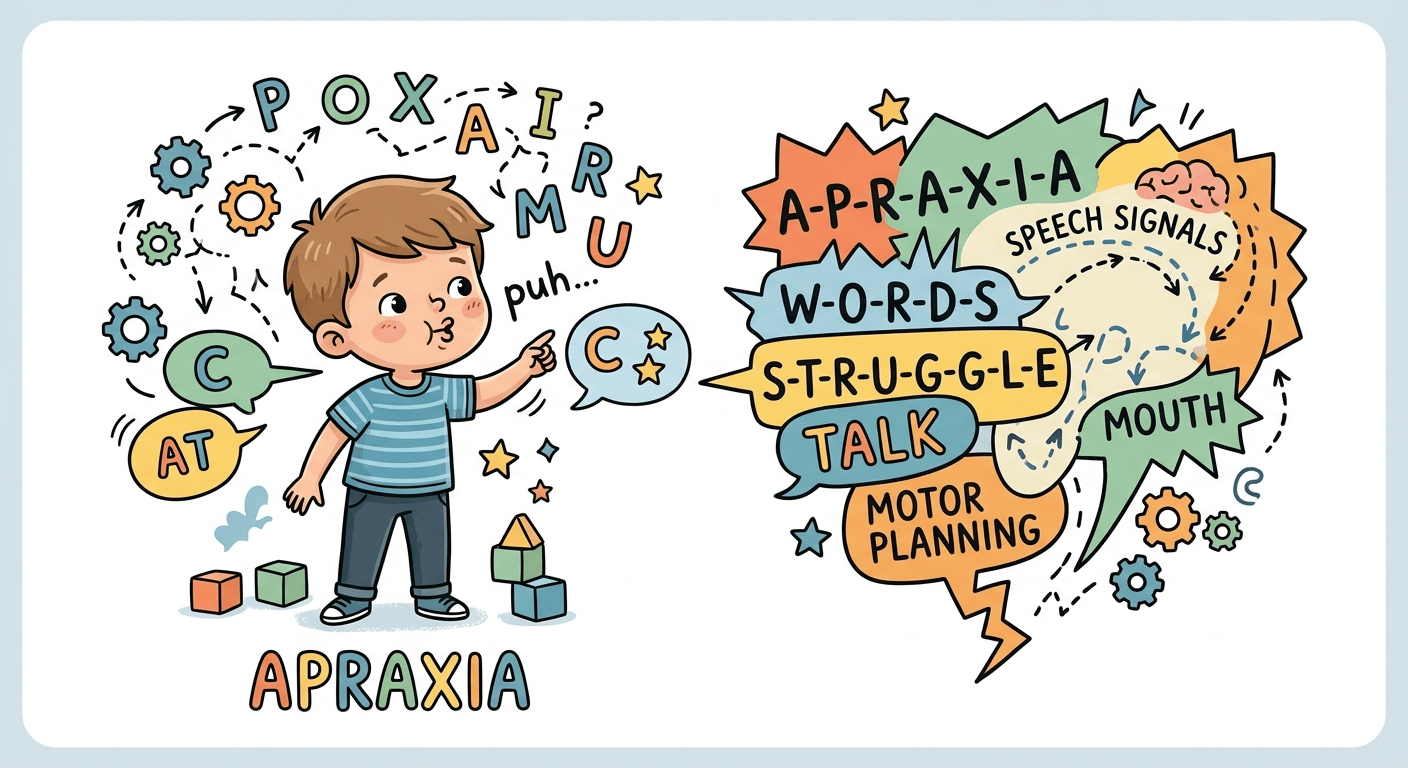
Childhood Apraxia of Speech (CAS) is a motor speech disorder where the brain struggles to plan and program the movements needed to produce speech sounds consistently and accurately. Children with CAS know what they want to say but cannot reliably get their mouth to produce it.

Specialist motor speech therapists
Intensive, frequent therapy sessions
Dynamic Temporal and Tactile Cueing (DTTC)
AAC support alongside verbal therapy
Detailed parent coaching for home practice
Apraxia of speech therapy at Growing Stars Lucknow
4.9 Β· 200+ Google Reviews

Early Intervention Matters: CAS requires intensive speech therapy β€” often 3–5 sessions per week for younger children. Frequent, targeted practice is the only way to build the motor plans for speech. Early diagnosis and intervention are critical.

Recognise the Signs

Signs & Symptoms of
Apraxia of Speech

Recognising these signs early can make a significant difference. If your child shows several of these, seek a professional evaluation promptly.

Very inconsistent speech errors

The same word is pronounced differently each time β€” unlike other speech disorders where errors are consistent.

Difficulty imitating speech sounds

Struggles to imitate simple sounds or words, even when the child clearly understands what is asked.

Groping movements

Visible searching or groping of the lips and tongue as the child tries to find the right position for a sound.

Prosody differences

Unusual rhythm, stress, and intonation patterns β€” speech may sound robotic, flat, or have stress in unexpected places.

Better performance in automatic speech

More fluent production in highly automatic speech (counting, singing) compared to conversational or imitated speech.

Limited consonant and vowel inventory

Very restricted range of speech sounds, leading to highly limited intelligibility.

Understanding the Condition

Causes & Contributing Factors

Understanding why Apraxia of Speech occurs helps families navigate the journey with clarity and confidence.

Neurological Origin

CAS results from differences in the neural pathways responsible for planning and programming speech movements, not from weakness of the speech muscles.

Genetic Factors

Mutations in the FOXP2 gene and other genetic variants have been associated with CAS and speech-language disorders.

Associated Conditions

CAS frequently occurs alongside autism, intellectual disability, galactosaemia, and other neurodevelopmental conditions.

Idiopathic

In many children, no specific underlying cause can be identified, and CAS is considered to be idiopathic (arising without a known cause).

How We Help

Our Approach to
Apraxia of Speech

A structured, compassionate process from first assessment to lasting outcomes β€” personalised to every child.

Step 01

Motor Speech Assessment

Comprehensive evaluation distinguishing CAS from phonological disorder, dysarthria, and other speech conditions.

Step 02

Intensive Therapy Programme

Frequent sessions (3–5 per week for young children) using CAS-specific motor learning principles.

Step 03

DTTC & ReST Techniques

Evidence-based motor speech approaches including Dynamic Temporal and Tactile Cueing and Rapid Syllable Transition Treatment.

Step 04

Multisensory Cueing

Using visual, auditory, and tactile cues to help the child find and stabilise correct motor plans for speech sounds.

Step 05

AAC as a Bridge

Implementing AAC (apps, PECS, signing) to support communication while spoken language is developing.

Step 06

Home Practice Programme

Structured daily home practice activities β€” essential for building motor memory β€” with detailed parent coaching.

Expected Outcomes

What Families See
After Treatment

With consistent therapy and family involvement, children with Apraxia of Speech make meaningful, measurable progress at Growing Stars.

More consistent and accurate speech production
Expanded consonant and vowel sound inventory
Improved speech intelligibility
More natural prosody and intonation
Successful AAC use as a communication bridge
Increased communication confidence and participation
Where to Find Us

Available at
Both Locations

Main Center

Aliganj Center

MM-271, Sector D, Aliganj, Lucknow
Mon–Sat: 9 AM – 7 PM

IIM Road Center

IIM Road, Near Rajhansh Public School, Lucknow
Mon–Sat: 10 AM – 6 PM
FAQ

Common Questions
About Apraxia of Speech

Still have questions? We're here to help. Reach out to our Lucknow team directly.

Contact Us

No. CAS is a specific motor speech disorder requiring a different treatment approach to phonological disorders or simple speech delays. Standard speech therapy techniques used for other conditions are not as effective for CAS β€” the therapy must specifically target motor planning and programming.

Research supports intensive therapy β€” 3 to 5 sessions per week β€” for young children with CAS, particularly in the early years. Unlike other speech disorders, infrequent therapy (once a week) is much less effective for CAS because the motor learning principles require frequent, massed practice.

Many children with CAS make significant progress and develop functional, intelligible speech with appropriate, intensive therapy. Progress depends on severity, consistency of therapy, and underlying factors. Some children with severe CAS continue to benefit from AAC alongside developing speech.

Ready to Help Your Child
Overcome Apraxia of Speech?

Book a free 30-minute assessment at our Aliganj or IIM Road center. Our specialists will evaluate your child and design a personalised therapy plan.

Free assessment Β· No waiting list Β· Aliganj & IIM Road Centers

Related Conditions

These conditions often co-occur or share similar characteristics with Apraxia of Speech.

Recommended Therapies

Our evidence-based services that directly address Apraxia of Speech.