
Logo Light
Logo Light
Contact Us
hello@growingstar.in
+91-6307034344
Mon - Sat (9AM - 7PM)

Follow Us

🎯 Neurological
Ages: 3+ years

Dyspraxia / DCD
Treatment in Lucknow

Coordinating movement, building confidence

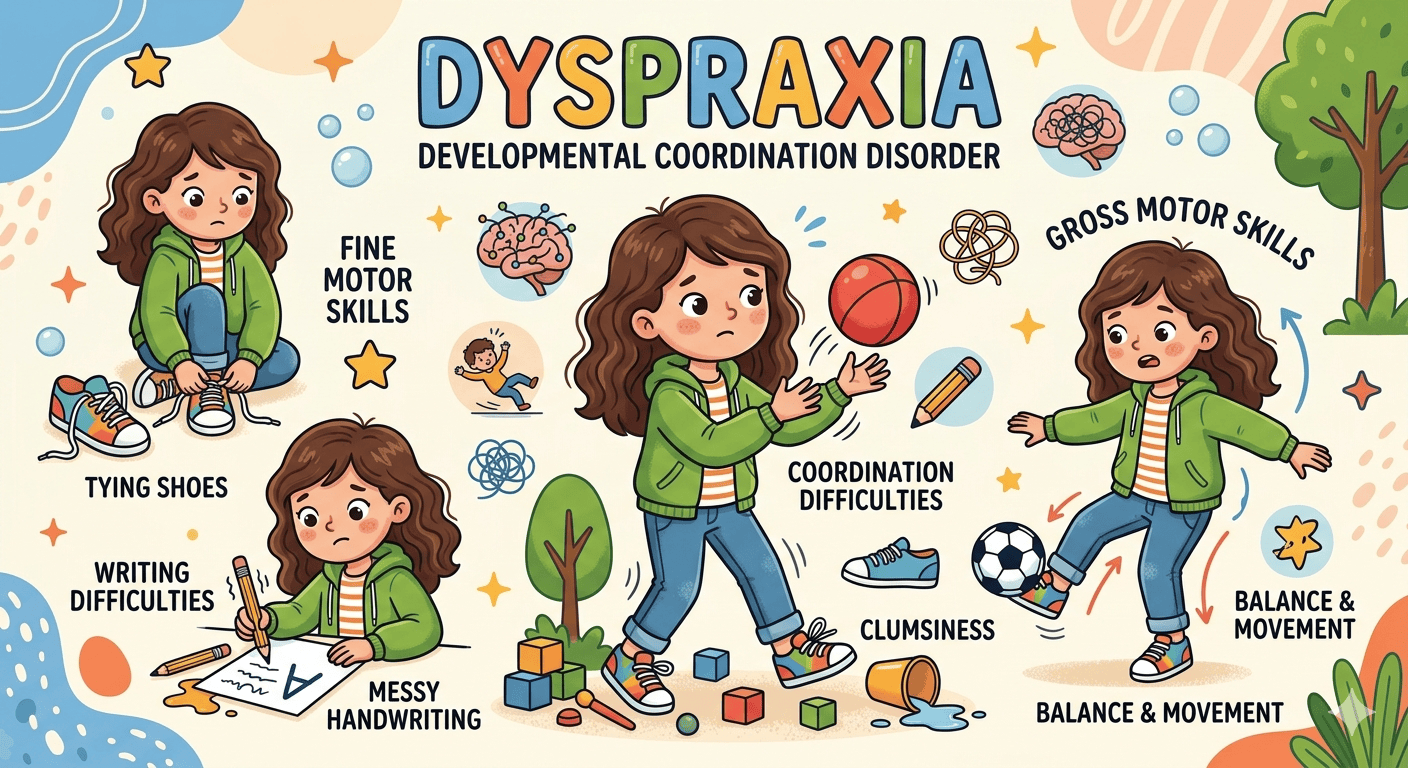
Dyspraxia, formally known as Developmental Coordination Disorder (DCD), is a neurodevelopmental condition that significantly affects the ability to plan and execute coordinated movements. It impacts everyday tasks from getting dressed to handwriting to sport β€” despite normal intelligence and motivation.

Specialist occupational therapy assessment
Motor learning and coordination programmes
Handwriting and fine motor intervention
Sport and PE skill building
School accommodation guidance
Dyspraxia DCD therapy at Growing Stars Lucknow
4.9 Β· 200+ Google Reviews
Recognise the Signs

Signs & Symptoms of
Dyspraxia / DCD

Recognising these signs early can make a significant difference. If your child shows several of these, seek a professional evaluation promptly.

Poor balance and coordination

Frequently bumping into things, difficulty with stairs, poor balance on one foot, or clumsy movement patterns.

Difficulty learning new motor skills

Takes much longer than peers to learn riding a bike, swimming, catching a ball, or tying shoelaces.

Handwriting difficulties

Slow, effortful, or illegible handwriting β€” often associated with an unusual pencil grip or excessive pressure.

Poor organisation and planning

Difficulty with sequencing multi-step tasks, getting dressed, managing a school bag, or organising schoolwork.

Avoidance of physical activities

Reluctance to participate in sport or PE due to embarrassment about coordination difficulties.

Difficulty with self-care

Persistent struggles with buttons, zips, cutlery, and other fine motor self-care tasks beyond the expected age.

Understanding the Condition

Causes & Contributing Factors

Understanding why Dyspraxia / DCD occurs helps families navigate the journey with clarity and confidence.

Neurological Differences

DCD involves differences in how the brain plans, organises, and executes movement β€” particularly in the pathways connecting the frontal cortex and cerebellum.

Prematurity & Low Birth Weight

Preterm birth and low birth weight are associated with increased risk of DCD.

Genetic Factors

DCD tends to run in families and frequently co-occurs with ADHD, dyslexia, and autism, suggesting shared genetic risk.

Not Due to Intellectual Disability or Neurological Disease

By definition, DCD cannot be better explained by intellectual disability, visual problems, or neurological conditions like cerebral palsy.

How We Help

Our Approach to
Dyspraxia / DCD

A structured, compassionate process from first assessment to lasting outcomes β€” personalised to every child.

Step 01

Motor Skills Assessment

Standardised assessment of gross and fine motor skills, balance, coordination, and the functional impact on daily life.

Step 02

Task-Oriented Motor Learning

Evidence-based CO-OP (Cognitive Orientation to Occupational Performance) approach β€” teaching the child to discover their own motor strategies.

Step 03

Fine Motor & Handwriting Programme

Targeted intervention for pencil grip, letter formation, cutting, and other fine motor school skills.

Step 04

Gross Motor & Balance Training

Building balance, core strength, bilateral coordination, and motor planning through structured activity.

Step 05

Self-Care Skills

Systematic teaching of dressing, feeding, and personal hygiene skills using adaptive strategies and practice.

Step 06

School Liaison & PE Support

Providing schools with strategies to modify PE participation and classroom motor demands appropriately.

Expected Outcomes

What Families See
After Treatment

With consistent therapy and family involvement, children with Dyspraxia / DCD make meaningful, measurable progress at Growing Stars.

Improved gross motor coordination and balance
Better handwriting and fine motor skills
Greater independence in self-care tasks
Increased confidence in physical activities
Better organisation and daily life management
Improved participation and enjoyment of school
Where to Find Us

Available at
Both Locations

Main Center

Aliganj Center

MM-271, Sector D, Aliganj, Lucknow
Mon–Sat: 9 AM – 7 PM

IIM Road Center

IIM Road, Near Rajhansh Public School, Lucknow
Mon–Sat: 10 AM – 6 PM
FAQ

Common Questions
About Dyspraxia / DCD

Still have questions? We're here to help. Reach out to our Lucknow team directly.

Contact Us

Dyspraxia/DCD goes far beyond ordinary clumsiness. It significantly affects a child's ability to learn and perform coordinated movements, impacts academic performance (particularly handwriting), and affects daily life and self-esteem. It is a recognised neurodevelopmental condition requiring professional intervention, not simply practice.

Yes, and it is important that they do. While motor sports may need to be approached differently, physical activity is crucial for children with DCD for motor development, confidence, and wellbeing. We can guide families toward appropriate activities and adaptive strategies to make sport more accessible.

DCD does not go away, but children can make significant progress with therapy and develop effective compensatory strategies. Many adults with DCD live very successfully with appropriate strategies in place. Early intervention maximises outcomes.

Ready to Help Your Child
Overcome Dyspraxia / DCD?

Book a free 30-minute assessment at our Aliganj or IIM Road center. Our specialists will evaluate your child and design a personalised therapy plan.

Free assessment Β· No waiting list Β· Aliganj & IIM Road Centers

Related Conditions

These conditions often co-occur or share similar characteristics with Dyspraxia / DCD.

Recommended Therapies

Our evidence-based services that directly address Dyspraxia / DCD.