
Logo Light
Logo Light
Contact Us
hello@growingstar.in
+91-6307034344
Mon - Sat (9AM - 7PM)

Follow Us

πŸ”„ Speech & Language
Ages: All ages

Stammering / Stuttering
Treatment in Lucknow

Finding your voice, one step at a time

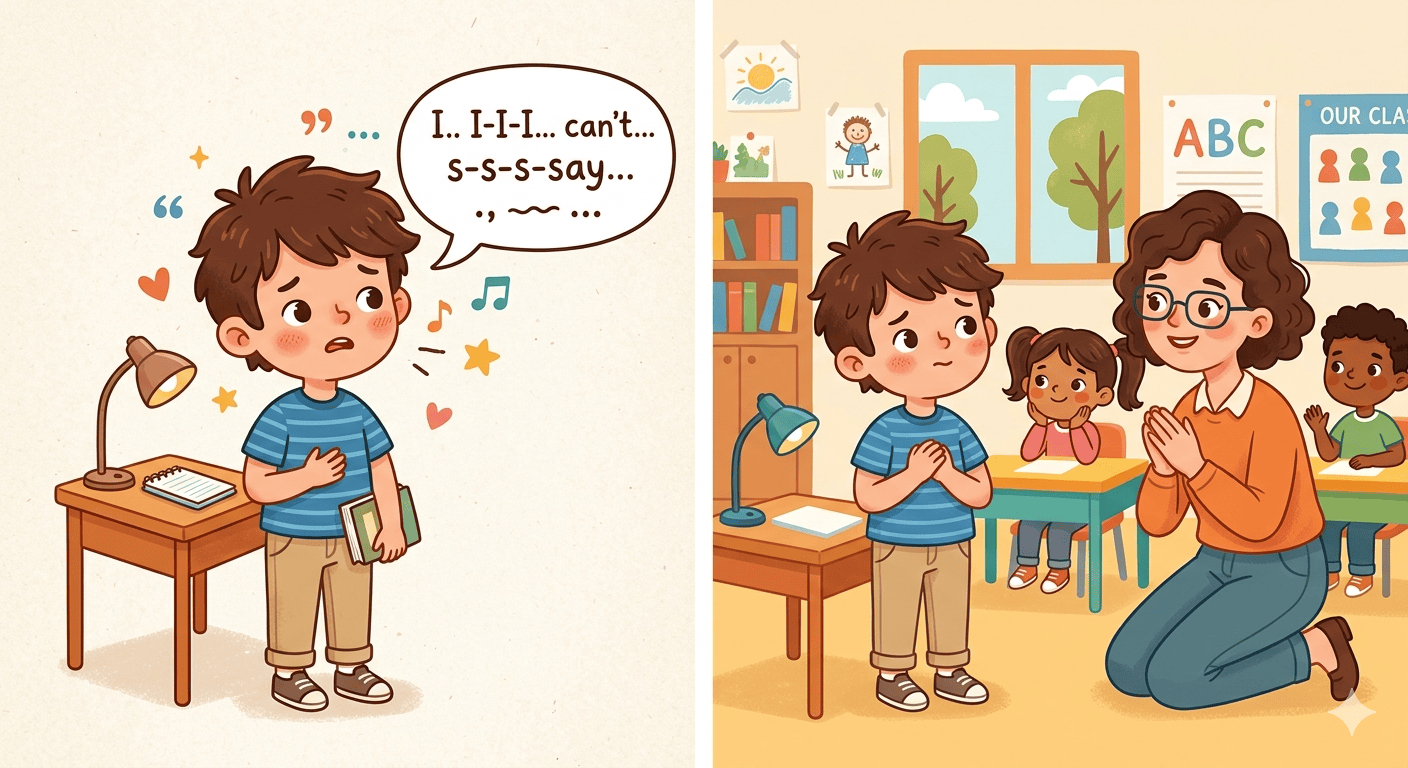
Stammering (also called stuttering) is a fluency disorder characterised by involuntary repetitions, prolongations, and blocks during speech. It can significantly impact confidence and social participation. At Growing Stars, we offer evidence-based fluency therapy for children and adults in Lucknow.

Specialist fluency therapists with years of experience
Evidence-based techniques: Lidcombe, SpeakMore Fluently
Therapy for children and adults
Confidence and communication coaching included
Individual and group therapy options
Stammering therapy session at Growing Stars Lucknow
4.9 Β· 200+ Google Reviews
Recognise the Signs

Signs & Symptoms of
Stammering / Stuttering

Recognising these signs early can make a significant difference. If your child shows several of these, seek a professional evaluation promptly.

Sound and syllable repetitions

Repeating the first sound or syllable of a word, e.g., "I w-w-want" or "ca-ca-can I".

Prolongations

Stretching out a sound for an abnormal length of time, e.g., "Sssss-see you later".

Blocks

Moments where the speaker is unable to produce any sound β€” a silent "freezing" mid-word or sentence.

Secondary behaviours

Physical tension, eye blinking, facial grimacing, or avoidance of certain words or speaking situations to manage stammering.

Avoidance of speaking situations

Declining to answer in class, avoiding phone calls, or using simpler words to avoid expected stuttering moments.

Emotional impact

Anxiety, embarrassment, shame, or frustration connected to speech, affecting confidence and social participation.

Understanding the Condition

Causes & Contributing Factors

Understanding why Stammering / Stuttering occurs helps families navigate the journey with clarity and confidence.

Neurological Differences

Brain imaging research shows differences in how the brains of people who stutter process and coordinate speech. It is a neurological β€” not psychological β€” condition.

Genetic Factors

Stammering runs in families. If a parent or sibling stutters, the risk in other family members is significantly elevated.

Developmental Phase

Many children go through a normal phase of disfluency between ages 2–5 as language skills rapidly expand. True stammering persists beyond this phase.

Psychological Amplification

While stammering is not caused by anxiety, stress and speaking pressure can worsen its frequency and severity significantly.

How We Help

Our Approach to
Stammering / Stuttering

A structured, compassionate process from first assessment to lasting outcomes β€” personalised to every child.

Step 01

Fluency & Communication Assessment

A detailed evaluation of stuttering type, severity, speaking situations, and the emotional and social impact on the individual.

Step 02

Evidence-Based Fluency Techniques

Teaching controlled fluency techniques such as gentle voicing onset, easy starts, and smooth speech patterns.

Step 03

Desensitisation & Acceptance

Reducing fear and avoidance by gradually approaching difficult speaking situations with support and confidence.

Step 04

Lidcombe Programme (for young children)

A parent-delivered early intervention programme with strong evidence for reducing stammering in preschool children.

Step 05

Confidence & Communication Coaching

Building assertiveness, reducing speaking avoidance, and developing a healthy self-identity as a communicator.

Step 06

Transfer & Maintenance

Practising fluency skills across real-world speaking situations and providing strategies to maintain progress long-term.

Expected Outcomes

What Families See
After Treatment

With consistent therapy and family involvement, children with Stammering / Stuttering make meaningful, measurable progress at Growing Stars.

Measurable reduction in stuttering frequency and severity
Reduced avoidance of speaking situations
Improved speaking confidence and self-esteem
Better social and professional communication
Practical tools to manage stuttering in daily life
Long-term maintenance strategies to sustain progress
Where to Find Us

Available at
Both Locations

Main Center

Aliganj Center

MM-271, Sector D, Aliganj, Lucknow
Mon–Sat: 9 AM – 7 PM

IIM Road Center

IIM Road, Near Rajhansh Public School, Lucknow
Mon–Sat: 10 AM – 6 PM
FAQ

Common Questions
About Stammering / Stuttering

Still have questions? We're here to help. Reach out to our Lucknow team directly.

Contact Us

Approximately 75–80% of children who begin to stammer will recover naturally, often by age 7–8. However, the 20–25% who do not recover are at risk of lifelong stammering. Early treatment, particularly with the Lidcombe Programme before age 6, significantly improves recovery rates.

No. Stammering is a neurological condition with strong genetic links. It is not caused by nervousness, anxiety, bad parenting, or trauma. These myths are harmful β€” stammering is not a psychological problem and is not anyone's fault.

Yes. While stammering is more difficult to eliminate completely in adults, therapy can significantly reduce its impact, reduce avoidance behaviours, and improve communication confidence and quality of life at any age.

No. Finishing sentences or rushing the child can increase anxiety around speech. Instead, give the child your full attention, make eye contact, wait patiently, and maintain a calm and unhurried environment. Our therapists will coach you on the best responses during our sessions.

Ready to Help Your Child
Overcome Stammering / Stuttering?

Book a free 30-minute assessment at our Aliganj or IIM Road center. Our specialists will evaluate your child and design a personalised therapy plan.

Free assessment Β· No waiting list Β· Aliganj & IIM Road Centers

Related Conditions

These conditions often co-occur or share similar characteristics with Stammering / Stuttering.

Recommended Therapies

Our evidence-based services that directly address Stammering / Stuttering.